

Why Planning Together Makes or Breaks Your Romantic Getaway
A trip planner for couples transforms chaotic vacation planning into a collaborative experience that strengthens relationships. The best tools offer real-time collaboration, shared budgeting, and AI-powered recommendations to help partners create memorable getaways without the stress.
Quick Answer for Couples’ Trip Planning:
- Collaborative Features: Real-time editing, shared wishlists, voting on activities
- Budget Management: Expense tracking, cost splitting, currency conversion
- Smart Organization: Centralized itineraries, automatic reservation imports, offline access
- AI Recommendations: Personalized suggestions, route optimization, hidden gems findy
Travel should bring couples closer together, not drive them apart. Yet planning a romantic getaway often becomes a source of friction. One partner wants trip while the other craves relaxation. Someone picks expensive restaurants while their partner worries about the budget.
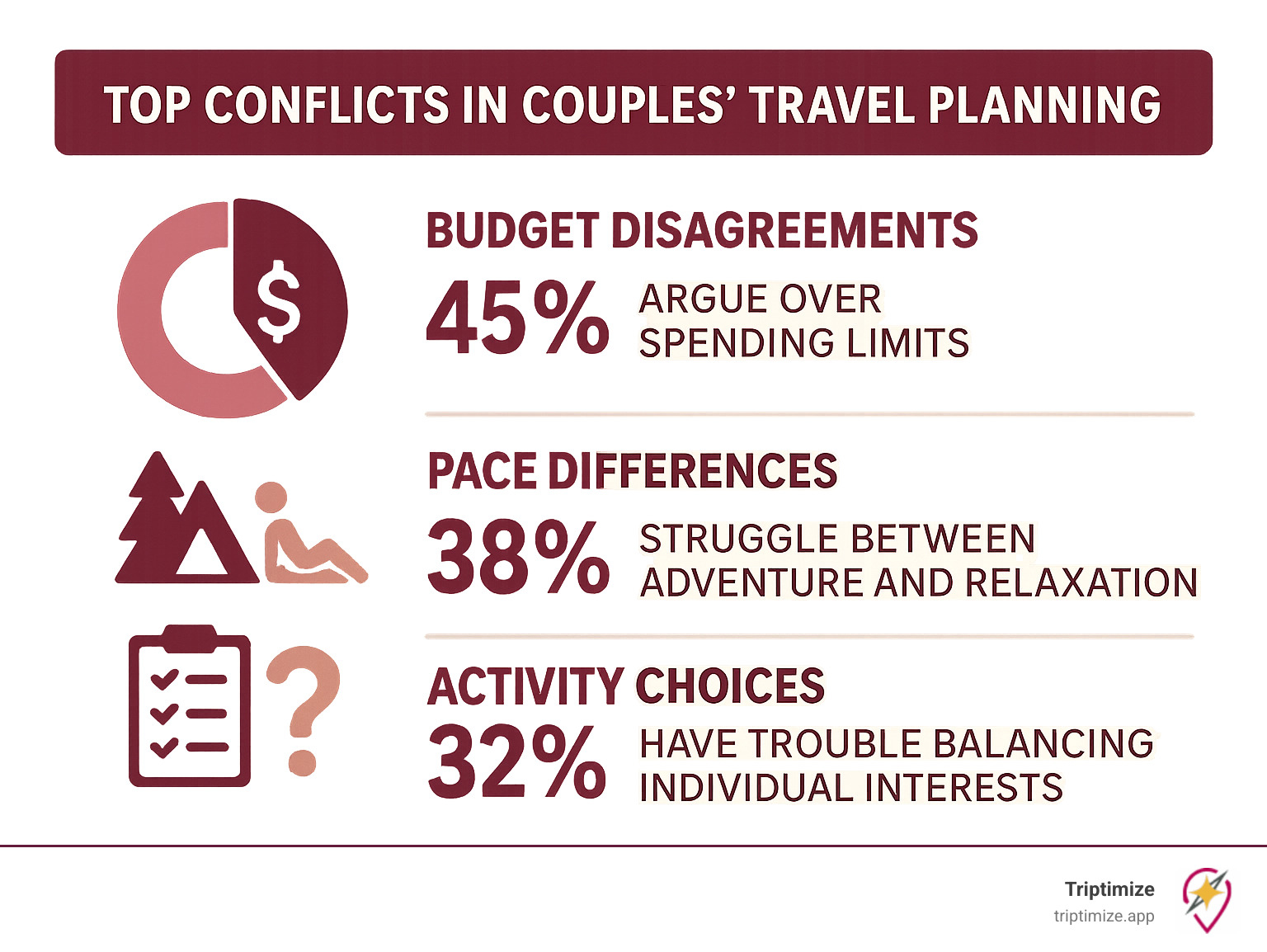
The research shows this struggle is real – couples face three main conflicts when planning trips: budget disagreements, different pacing preferences, and activity choices. Without the right tools, these planning sessions can feel more like negotiations than exciting preparation for quality time together.
A dedicated trip planner built for couples solves these problems by creating neutral ground where both partners can contribute equally. Instead of one person doing all the work while the other tags along, modern planning tools make collaboration natural and fun.
As Michael Melichar, Co-Founder of Triptimize, I’ve seen how the right trip planner for couples eliminates stress and creates space for the excitement that should define vacation planning. My experience building AI-powered travel platforms has shown me that technology works best when it brings people together rather than replacing human connection.
Why Planning as a Couple is a Unique Challenge
When you’re planning a trip with your partner, you’re not just picking destinations and booking hotels. You’re essentially merging two different travel philosophies into one shared experience. This is what makes using a trip planner for couples so much more complex than solo travel planning.
Think about it: one of you might be the type who loves spontaneous trips and stumbling upon hidden local spots, while the other feels most comfortable with a detailed itinerary and confirmed reservations. Neither approach is wrong – they’re just different ways of experiencing the world. The challenge lies in finding a middle ground that honors both styles.
Balancing action with relaxation creates another common source of tension. You might be dreaming of packed days filled with museums, hiking, and city exploration, while your partner envisions lazy mornings in bed and long afternoons by the pool. Research shows this pacing conflict affects many couples, and it’s completely normal.
Then there’s the money conversation – arguably the trickiest part of planning together. Financial transparency becomes essential when you’re sharing expenses and making decisions that affect both your wallets. Unlike solo travel where you only answer to yourself, couples must steer potentially sensitive discussions about spending limits, what’s worth splurging on, and how to split costs fairly.
Avoiding one-sided planning requires intentional effort. Too often, one partner ends up becoming the unofficial “travel agent” for the relationship, doing all the research, making all the bookings, and carrying the mental load of trip organization. This creates an imbalance that can lead to resentment or a trip that only reflects one person’s preferences.
This is where using a planner as neutral ground becomes invaluable. When both partners can contribute suggestions, vote on activities, and see the full picture simultaneously, planning transforms from a solo task into a collaborative experience. Custom Travel Experiences for Couples can help you design trips that truly reflect both partners’ interests and travel styles.
Visualizing the trip together makes all the difference. When you can both see your itinerary on a map, understand how activities flow from day to day, and spot potential issues before you leave home, the planning process becomes exciting rather than stressful. You’re not just talking about abstract ideas anymore – you’re looking at your actual trip taking shape.
The beauty of modern trip planning tools is that they create space for compromise and shared decision-making without the usual friction. Instead of endless back-and-forth conversations that go nowhere, you have a structured way to blend your different travel styles into something that works for both of you.
The Ultimate Trip Planner for Couples: Essential Features to Look For

A great trip planner for couples should feel like an extra teammate—one that speaks to both of your travel styles. At minimum, look for:
- Real-time collaboration so you can edit together without version chaos
- All-in-one itinerary storage for flights, stays and activities
- Built-in budgeting that tracks and splits costs automatically
- AI suggestions that consider both partners’ preferences
Fostering Compromise with Collaborative Tools
Shared wishlists, live commenting and simple voting let you merge ideas quickly—no endless text threads required. The best platforms even nudge both partners to participate so planning never falls on one person. When you can see a day overloaded with activities, it is easy to rebalance before you travel.
How Our Trip Planner Works shows this process in action.
Seamless Itinerary & Reservation Management
A single dashboard—and a map view—replace scattered emails. Automatic import of confirmations, route optimization for road trips and offline access keep both of you informed even without Wi-Fi. Fewer logistical questions mean more time enjoying the trip.
Mastering Your Travel Budget Together
Real-time expense tracking and live currency conversion end the “who paid last?” debate. Agree on a total budget, watch spending categories together and course-correct before costs spiral. Small tactics—like booking flights on Sundays or travelling in shoulder season—stretch your shared funds further.
The Magic of AI in Crafting Your Romantic Getaway

Artificial intelligence has transformed how couples find and plan romantic getaways, moving far beyond the days of flipping through generic travel guides or spending hours researching online. Today’s AI-powered trip planner for couples analyzes both partners’ unique preferences, past travel experiences, and stated interests to uncover experiences that neither person might have finded on their own.
The beauty of personalized recommendations lies in how AI considers the full picture of your relationship’s travel style. If one partner gravitates toward art museums while the other craves outdoor trips, the system might suggest a charming European city with world-class galleries nestled near scenic hiking trails. It’s like having a travel agent who truly understands both of you.
AI-generated itineraries process millions of data points to create schedules that maximize your time together while minimizing stress. These intelligent systems factor in everything from museum opening hours and restaurant peak times to local traffic patterns and weather forecasts. The result? More time enjoying each other’s company and less time standing in lines or rushing between activities.
Finding hidden gems becomes effortless when AI analyzes thousands of reviews, social media posts, and local recommendations to surface authentic experiences that typical guidebooks miss. Picture finding a secluded beach where locals watch the sunset, a family-run trattoria tucked away in a quiet neighborhood, or a scenic overlook perfect for that romantic photo you’ll treasure forever.
Optimizing travel time helps couples make every moment count during precious vacation days. AI suggests the most efficient routes between activities, recommends ideal times to visit popular attractions to avoid crowds, and can even predict potential flight delays based on historical patterns. This means more time for spontaneous gelato stops and fewer rushed transitions.
Crafting complex multi-destination trips becomes surprisingly manageable with AI assistance. Whether you’re planning a European city-hopping trip or a multi-island Caribbean escape, the technology optimizes travel routes, suggests appropriate time allocations for each location, and ensures smooth transitions between different parts of your journey.
The Triptimize Blog for Travel Inspiration offers additional insights into how AI continues to revolutionize the travel planning experience for modern couples.
Tailoring suggestions for romance involves understanding the subtle elements that make experiences special for couples. AI learns to recommend restaurants with intimate atmospheres perfect for deep conversations, suggest activities that encourage connection and shared findy, and find accommodations with romantic touches like private balconies overlooking stunning views or couples’ spa services for ultimate relaxation together.
Pro Tips for a Stress-Free Planning Experience
The difference between a stressful planning experience and an exciting one often comes down to how couples approach their conversations about travel. The best trip planner for couples becomes even more effective when partners use it alongside thoughtful communication strategies.
Starting with a “dream session” transforms planning from a logistical task into an inspiring conversation. Sit down together without laptops or phones and simply talk about what you both hope to experience. Maybe one partner dreams of sunrise coffee on a European balcony while the other imagines exploring local markets hand-in-hand. These conversations reveal shared desires you might not have realized you had.
Here are 5 conversation starters that help couples align their travel dreams:
- “What’s one thing you absolutely must do on this trip?”
- “What’s your ideal balance between planned activities and free time?”
- “How do you want to feel at the end of each day?”
- “What’s your comfort level with our trip budget?”
- “What would make this trip feel romantic and special to you?”
Defining trip goals together prevents the common scenario where one person plans an action-packed itinerary while the other expects a relaxing retreat. Are you planning primarily a relaxation vacation, an trip trip, a cultural exploration, or a romantic getaway? Different trip types require different approaches to budgeting, pacing, and activity selection.
Scheduling blocks for spontaneity might sound contradictory, but intentionally leaving gaps in your itinerary creates space for those magical unplanned moments. The best travel memories often come from unexpected findies – a charming café you stumbled upon, a street festival you happened to encounter, or an extra hour spent watching the sunset because it was too beautiful to leave.
Planning for downtime becomes especially important when couples have different energy levels or travel styles. Building rest periods into your schedule prevents the exhaustion that can turn a romantic getaway into a forced march through tourist attractions. These quiet moments also give couples time to connect without the pressure of constant activity.
Discussing non-negotiables early prevents conflicts later in the planning process. If visiting a specific museum is crucial to one partner or a certain type of accommodation is essential for the other, addressing these requirements upfront helps shape the entire trip around what matters most to both of you.
Pre-departure checklists help couples stay organized and ensure nothing important gets forgotten. This includes practical preparations like checking passport expiration dates and confirming flight details, as well as relationship-focused discussions about expectations and backup plans for potential challenges.
The importance of travel insurance cannot be overstated for couples’ trips. Insurance protects your investment and provides peace of mind, especially for expensive romantic getaways or international travel. When you’ve put thought and resources into planning the perfect trip together, protecting that investment makes financial and emotional sense.
Frequently Asked Questions about Using a Trip Planner for Couples
How do we plan a trip that suits us both?
Start a shared wishlist and freely add ideas. Then spot overlaps or alternate “pick” days so everyone gets a win. A visual planner highlights imbalance—three art museums but no hikes? Adjust before you book.
What’s the smartest way to handle the budget?
Agree on a ceiling first, then log every cost in a shared tool that converts currencies and splits expenses automatically. Decide where you’ll splurge (hotel, food, experiences) and travel in shoulder seasons for lower prices.
How does a digital planner reduce arguments?
It creates one source of truth. Real-time updates, asynchronous comments and equal access to every reservation eliminate the “I thought you booked it” moments that spark stress.
Conclusion
Planning a romantic getaway together isn’t just about booking flights and hotels – it’s about building something beautiful as a couple. When you approach trip planning as a team sport rather than a chore, something magical happens. You find new things about each other, practice the art of compromise, and create anticipation that makes the actual trip even sweeter.
The days of arguing over scattered spreadsheets and lost confirmation emails are behind us. Modern trip planners for couples have turned what used to be a relationship stress test into an opportunity for connection. With real-time collaboration, transparent budgeting, and AI that actually understands what you both want, these tools let you focus on the fun stuff – dreaming about your trip together.
The benefits don’t end when you return home either. Couples who plan together develop superpowers in communication and problem-solving that strengthen their relationship long after the vacation tan fades. You learn to steer differences constructively, make decisions as a team, and create shared ownership of your experiences.
Technology works best when it brings people closer together, not when it replaces human connection. The best trip planner for couples doesn’t eliminate the need for those late-night conversations about whether to splurge on the ocean view room. Instead, it creates a better space for those conversations to happen without the frustration of disorganized information and missed details.
At Triptimize, we’ve built our platform specifically for couples who want to create extraordinary travel experiences together. Our AI-powered recommendations understand both partners’ preferences, our real-time collaboration tools prevent planning from becoming a solo project, and our comprehensive itinerary management keeps everything organized in one place. We eliminate the friction while preserving the excitement of finding new places together.
Your next romantic trip starts with a great plan, but more importantly, it begins with the shared commitment to creating something wonderful together. Whether you’re planning a quick weekend escape or an epic month-long journey, the planning process itself is part of your travel story.
Ready to transform how you plan trips together? Explore Trip Planner Use Cases to find how Triptimize can help you create the romantic getaway you’ve both been dreaming about – without the planning stress that used to come with it.