

Why Group Trip Planning Feels Like Herding Cats
Group trip planning can feel overwhelming, but it doesn’t have to be. Here’s the essential framework for stress-free group travel:
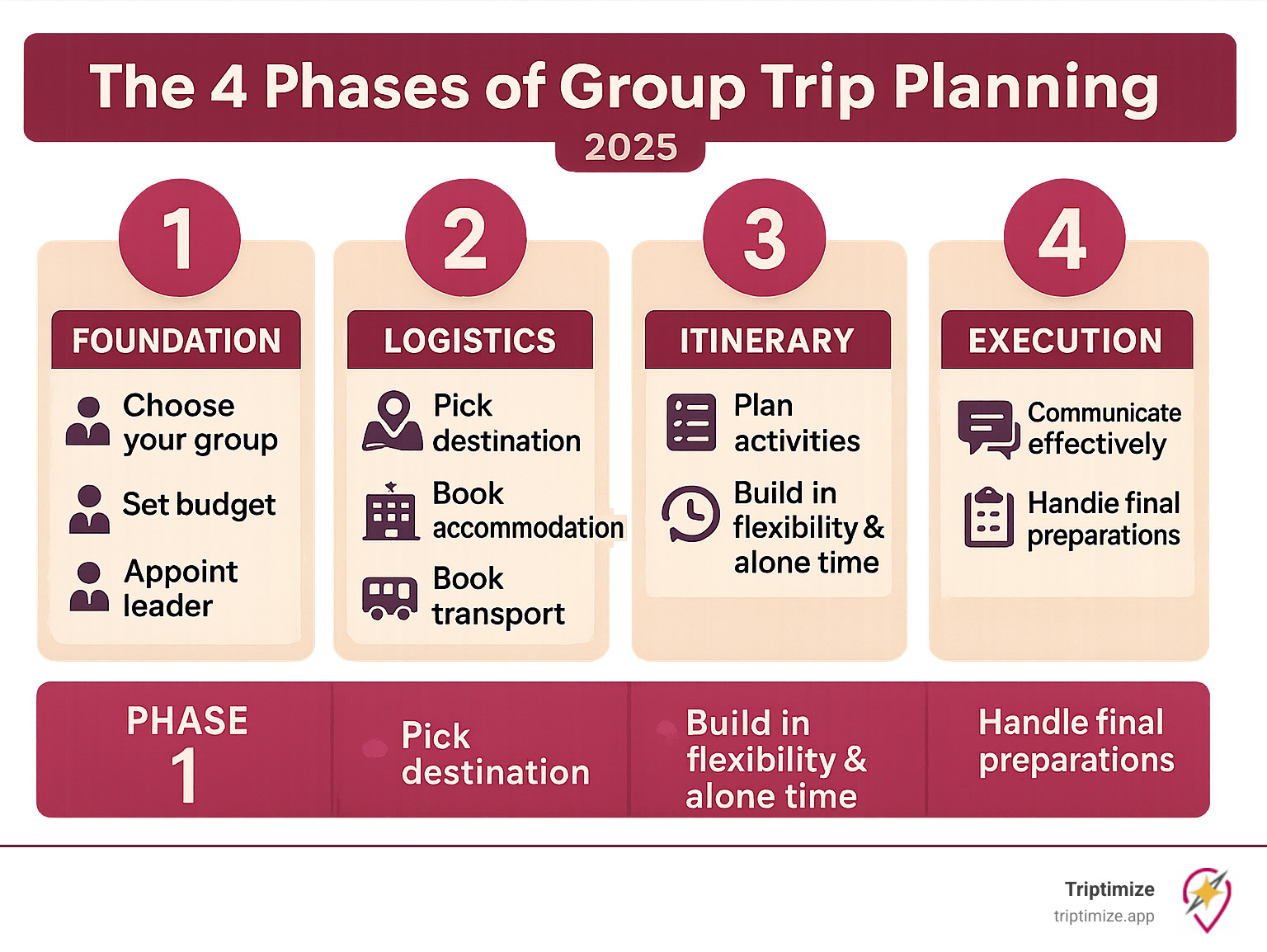
The 4 Key Phases of Group Trip Planning:
- Foundation – Choose your group, set budget, appoint leader
- Logistics – Pick destination, book accommodation and transport
- Itinerary – Plan activities while building in flexibility and alone time
- Execution – Communicate effectively and handle final preparations
Picture this: you and your friends have just arrived in Argentina. You’re ready for an amazing two-week trip, but before you’ve even had your first empanada, there’s tension as you start disagreeing about how to split funds and how to do everything you want when the group has wildly different interests and budgets.
Sound familiar? You’re not alone.
Planning a group trip can be an exhilarating experience, full of excitement for the trips ahead – but it also comes with its share of stress as you try to wrangle a group and manage expectations. The good news? When planned correctly, a group trip can be one of the most enriching travel experiences out there.
Just imagine all the fun you can have exploring a fantastic destination with like-minded travel companions. Traveling as a group means inside jokes, great stories, learning more about how to travel, and plenty of laughs. The shared experiences this type of travel offers can really deepen friendships and make all the planning worthwhile.
The key is having a system. This guide will walk you through each phase of group trip planning, from assembling your dream team to handling those final pre-departure details. You’ll learn how to avoid the common pitfalls that turn dream trips into friendship disasters.
I’m Michael Melichar, Co-Founder of Triptimize, where I’ve helped thousands of travelers tackle the complexities of group trip planning through our AI-powered platform. My background in product strategy and operations has shown me exactly where group trips succeed – and where they fall apart.
Phase 1: Laying the Groundwork for a Successful Group Trip

Before you price flights or pick restaurants, get the right people and expectations in place. A solid foundation now prevents headaches later.
Assembling Your Dream Team
Compatibility matters more than history. Match travel styles (early-bird vs. night-owl, relaxed vs. go-go-go) and comfort levels around spending. Share a quick “top three” wish-list for the trip; if those lists clash, rethink the invite list. Once you’ve confirmed who’s truly in, set an RSVP deadline and move forward.
More info about our Use Cases
The All-Important Question of Budget
Money talk is awkward only when it’s late. Agree on a comfortable range, note which costs will be split, and use a shared app or spreadsheet to record expenses in real time. A small, non-refundable deposit both secures bookings and signals commitment.
How Triptimize helps with group budgeting
Appointing a Group Leader (or Two)
A leader keeps the wheels turning—collecting ideas, sharing updates, and making tie-breaker calls. Spread the workload: one person can own lodging and transport, another handles activities and food. Clear roles mean fewer “Who’s doing what?” messages and faster decisions.
Phase 2: Nailing Down the Core Logistics

With your group assembled and expectations set, it’s time to tackle the exciting part: deciding where to go and how to get there. This phase is where your group trip planning really starts to feel real, but it also requires some serious coordination skills.
How to Choose a Destination Everyone Will Love
Here’s a truth bomb: deciding on a destination might actually be the toughest part of this whole process. How do you choose a place that makes everyone happy without breaking the bank?
The secret is getting organized about it. Start with a group survey where each person lists their top three to five dream destinations. Don’t worry about being practical at this stage – just dream big.
Once you have everyone’s lists, look for patterns. Are most people gravitating toward beach destinations, European cities, or trip trips? Sometimes the commonalities surprise you. Maybe half the group mentioned Thailand while the other half suggested Portugal – both could work depending on your vibe.
The “vibe” conversation is crucial. Do you want to spend your days lounging by a pool with a good book? Exploring cobblestone streets and museums? Hiking through national parks? Getting clear on what kind of experience you’re after helps narrow down the options fast.
Here’s where practical matters come in. A long international flight might not make sense for a four-day weekend, but it could be perfect for a two-week trip. Consider your time constraints, budget limits, and how far everyone’s willing to travel.
When you’ve narrowed it down to two or three options, let the group vote. Sometimes the best choice isn’t the most exotic one – it’s the destination that offers the most activities your group loves within your budget range.
Steps To Plan An Unforgettable Large Group Vacation provides additional insights on destination selection for larger groups. For those considering multiple stops, more info about Multi-Destination Trip planning can help you explore your options.
Booking Accommodation and Transport
Here’s something that might surprise you: hotels aren’t always the best option for groups. Unless you’re planning an all-inclusive resort experience, you’ll often get more bang for your buck with alternative accommodations.
Vacation rentals and large homes are often more economical and way more fun than booking multiple hotel rooms. Imagine having your own kitchen to cook breakfast together, a living room for evening hangouts, and maybe even a pool for afternoon relaxation. Plus, you can split the cost among the entire group.
Apartments with kitchens are another smart choice. You’ll save money on meals by cooking together, and grocery shopping in a foreign country can be an trip in itself. Some vacation homes even come with additional perks like a cook or management services.
That vacation homes typically require a one-week minimum stay, so factor this into your planning timeline. Also, these properties tend to book up quickly, especially during peak seasons.
Speed is your friend when it comes to securing good deals. The more people involved in decision-making, the slower the process can be – but accommodation prices can jump significantly if you wait too long.
For transportation, booking early is essential. Both flights and ground transport can increase dramatically in price as your travel date approaches. If you have a large group, explore group rates – though you typically need at least ten people to qualify for airline group discounts.
Consider renting minivans or larger vehicles for ground transportation, but book these early too. They tend to sell out quickly, especially in popular destinations.
Here’s a practical tip: while you should coordinate timing, have everyone make their own travel arrangements to the destination. This prevents one person from being responsible for everyone’s tickets and gives people flexibility in their departure times.
How Triptimize streamlines bookings can help you coordinate all these moving pieces without the usual spreadsheet chaos.
Phase 3: Mastering Your Itinerary

Now comes the fun part – creating an itinerary that keeps everyone happy without turning your vacation into a military operation. The secret sauce? Balance and flexibility. You want structure enough to hit the highlights, but freedom enough to follow your whims.
Think of your itinerary as a skeleton rather than a straitjacket. You need the bones to hold everything together, but there should be plenty of room to move and breathe.
Crafting a Flexible and Balanced Itinerary
Here’s the reality: you probably have at least one friend who dreams of lounging poolside with a good book, while another is already researching the best zipline tours. The beauty of group trip planning is that you don’t have to choose between these – you can have both.
Start by identifying your must-do activities – those experiences that everyone genuinely wants to share. Maybe it’s that sunset dinner cruise or the guided tour of ancient ruins. These become your anchor points, the non-negotiables that get booked first.
Schedule your key reservations early for popular attractions and restaurants. Nothing kills the mood like showing up to that famous rooftop bar only to find it’s fully booked. But here’s where flexibility comes in – plan optional activities around these fixed points. This gives people real choices about how to spend their time.
Building in downtime is crucial. Don’t fall into the trap of cramming every waking moment with activities. Some of the best travel memories happen during those unplanned hours when you stumble upon a local festival or find the perfect coffee shop.
Splitting up occasionally actually strengthens the group dynamic. Some friends can join that morning hiking tour while others sleep in and explore the local markets. When you reunite for dinner, everyone has fresh stories to share. More info about Custom Travel Experiences.
The Importance of Alone Time and Spontaneity
Let’s be honest – even your best friends can drive you a little crazy when you’re together 24/7. Taking some solo time during a group trip isn’t antisocial; it’s smart. It prevents group fatigue and actually makes you appreciate the shared moments more.
Individual interests matter. Not everyone gets excited about the same things, and that’s perfectly fine. While half the group explores that art museum, the other half might be perfectly content people-watching at a sidewalk café. Both groups end up happier than if everyone had been forced into the same activity.
Introverts especially need recharging time. A few hours alone can mean the difference between someone being grumpy for the rest of the trip and being fully present for group activities. It’s not personal – it’s just how some people recharge their batteries.
Don’t underestimate the power of embracing unexpected findies. Some of the best travel stories come from following local recommendations or stumbling upon something completely unplanned. Maybe the taxi driver mentions a hidden beach, or you overhear another traveler talking about an amazing hole-in-the-wall restaurant.
Local recommendations often lead to the most memorable experiences. Strike up conversations with shop owners, hotel staff, or fellow travelers. They know the gems that don’t make it into guidebooks. When you’re not glued together as a group every minute, you’re more likely to have these spontaneous interactions that become the stories you’ll tell for years.
The goal isn’t to plan every moment – it’s to create a framework that lets the magic happen naturally.
Phase 4: Communication, Tools, and Final Prep for Group Trip Planning
You’ve chosen your destination, booked your accommodation, and crafted the perfect itinerary. Now comes the final phase that can make or break your group trip planning experience: keeping everyone on the same page and handling those crucial last-minute details.
Effective Communication and Tools for Seamless Group Trip Planning
Here’s the truth about group travel: the more you communicate, the easier your group vacation will be. It’s that simple. Poor communication is what turns dream trips into friendship disasters, while great communication creates those magical shared experiences you’ll talk about for years.
The key is establishing clear communication channels from day one. You need a centralized information hub where everyone can access trip details without hunting through endless group chats or email threads. Think of it as your trip’s home base – one place where flight details, accommodation info, emergency contacts, and the latest itinerary version all live together.
Group chat etiquette matters more than you think. Set some ground rules early: What gets shared in the main chat versus side conversations? How much advance notice do you need for itinerary changes? Who’s responsible for updating shared documents? These little agreements prevent big headaches later.
Modern travel planning apps have revolutionized how groups stay organized. The best platforms offer real-time collaboration, expense tracking, and itinerary management all in one place. As one frequent group traveler told us, “I used to get exhausted planning one or two trips a year; now, I can plan 10 trips a year and have time to spare” after switching to a comprehensive planning tool.
The goal is eliminating the need to switch between multiple apps, tabs, and tools just to keep track of your travel plans. When everyone has instant access to the same information, those “Wait, what time is our dinner reservation?” moments disappear completely.
Triptimize for group trip planning offers AI-powered itinerary optimization and real-time updates that eliminate the spreadsheet chaos many groups experience. No more version control nightmares or wondering if you’re looking at the latest accommodation details. More info about our Blog for travel tips.
When to Get Extra Help for Your Group Trip Planning
Sometimes group trip planning gets complex enough that you need additional support. There’s no shame in recognizing when a situation calls for expert advice – it can actually save you time, money, and friendships.
Consider getting extra help when you’re planning complex multi-destination trips, organizing special occasions like destination weddings or milestone birthdays, or dealing with large groups of 15 or more people. Corporate retreats and incentive trips also benefit from professional coordination.
Expert assistance becomes invaluable for sourcing competitive group rates, booking custom experiences that aren’t available to individual travelers, and negotiating special services like private transportation or exclusive dining experiences. They can also handle the administrative burden of coordinating payments and reservations, taking pressure off your designated group leader.
For international travel, don’t overlook the importance of proper preparation. Travel insurance protects your group’s investment, especially when dealing with non-refundable deposits and group bookings. Find a suitable travel insurance plan to give everyone peace of mind.
The final weeks before departure are crucial for confirming reservations, collecting any outstanding payments, and ensuring everyone has the documents they need. This is when having a systematic approach really pays off – and when you might realize that getting professional help earlier would have been worth every penny.
The goal isn’t to plan the perfect trip – it’s to plan a trip that brings your group together and creates lasting memories. Sometimes that means knowing when to ask for help. More info about how to Contact Us.
Frequently Asked Questions about Group Trips
Let’s be honest – even with the best group trip planning, you’re going to run into some challenges. Here are the questions I hear most often from travelers, along with practical solutions that actually work.
How do you handle someone who isn’t paying on time?
This is probably the most uncomfortable situation you’ll face during planning, but it happens more often than you’d think. The key is being proactive rather than reactive.
Set clear deadlines upfront and stick to them. When you’re first discussing the trip, establish specific payment dates and communicate what happens if someone misses them. This isn’t about being mean – it’s about protecting the group’s plans and deposits.
Use payment collection tools with automatic reminders to take the awkwardness out of following up. Nobody wants to be the person constantly asking for money, and these tools handle the nagging for you.
Establish consequences for late payments in your initial agreement. This might mean losing your spot in the group or being responsible for any cancellation fees. Having this conversation early prevents hurt feelings later.
Sometimes you need to have a direct but gentle conversation if someone is consistently late with payments. People might be dealing with financial stress they haven’t shared with the group. A private discussion can help you find a solution that works for everyone – maybe they need a payment plan or need to bow out gracefully.
What’s the best way to make decisions when the group can’t agree?
Decision paralysis is real, especially when you’re trying to please everyone. The secret is having a system in place before you need it.
Use a pre-agreed method like voting or letting the designated leader make the final call. This prevents those endless group chats where nobody can decide between the beachfront villa and the city apartment. When everyone knows the process, decisions happen faster.
Look for compromises that blend different ideas whenever possible. Maybe you can’t agree on one restaurant, but you can agree to try both types of cuisine during your trip. The goal isn’t to make everyone 100% happy with every decision – it’s to make sure everyone gets something they’re excited about.
When all else fails, agree to split up for certain activities so everyone can do what they enjoy most. This is often the best solution for groups with diverse interests. Some people can hit the museums while others lounge by the pool, and you can all meet up for dinner with stories to share.
How far in advance should you plan a group trip?
Timing is everything when it comes to group trip planning. Start too late, and you’ll face higher prices and limited availability. Start too early, and people might lose interest or have life changes.
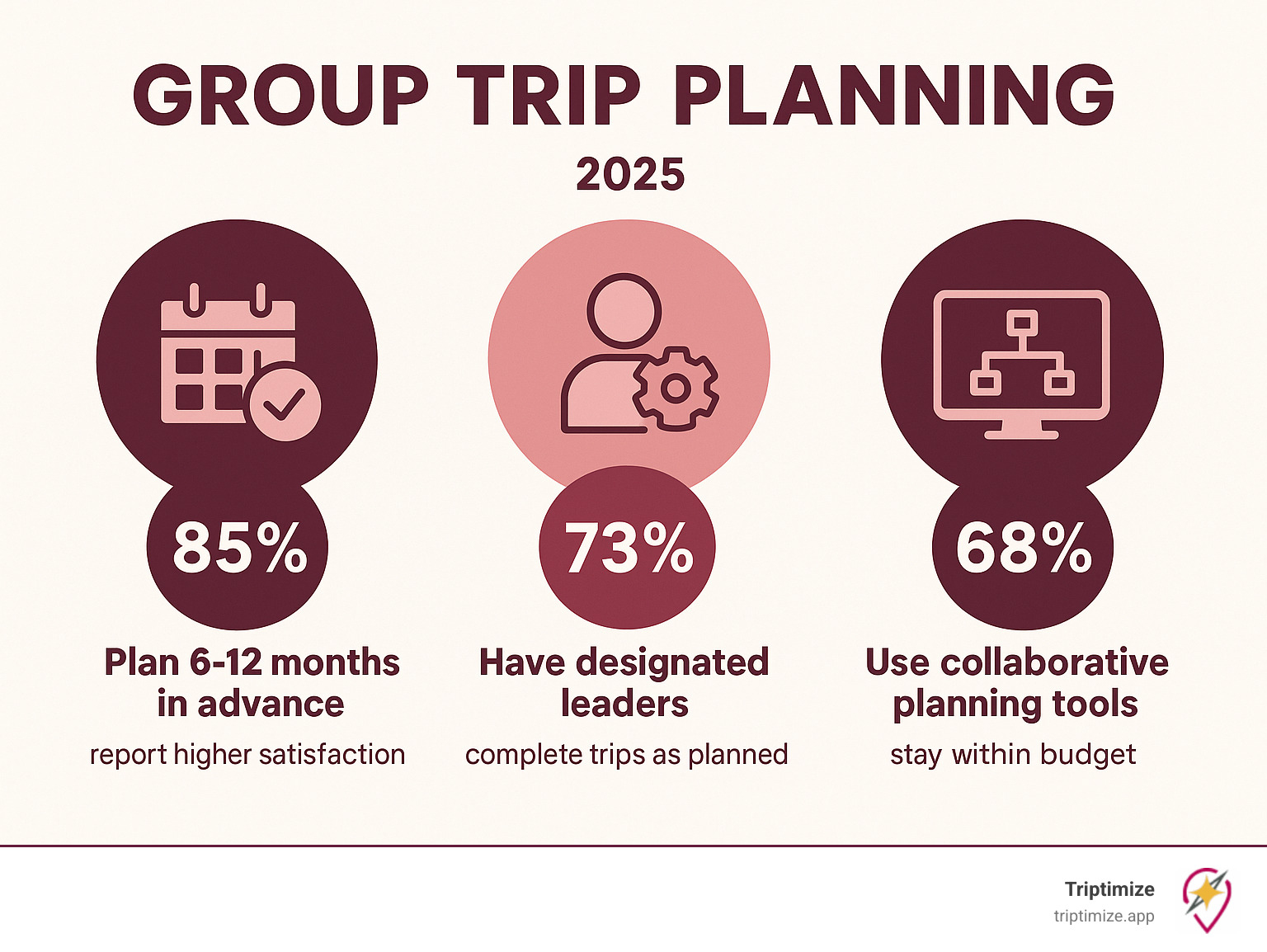
A minimum of 6-12 months is recommended, especially for international travel or large groups. This timeline gives you the best shot at reasonable prices for flights and accommodations, plus greater availability of your preferred options.
More importantly, this timeframe gives everyone in your group time to save money and request time off work. Nothing kills a trip faster than someone realizing they can’t get vacation days approved.
For domestic trips or smaller groups, 3-6 months might be sufficient, but earlier is always better for securing group rates and coordinating busy schedules. The larger your group, the more lead time you need – it’s just math when you’re trying to align multiple people’s calendars and budgets.
Some of the best deals and experiences get booked up to a year in advance, especially for popular destinations during peak seasons. Starting early gives you more options and less stress.
Conclusion

That moment when you’re sitting around a table with your travel companions on the last night of your trip, raising a toast to the incredible experiences you’ve shared – that’s what makes all the planning worth it. Group trip planning might feel overwhelming at first, but when you see the joy on your friends’ faces as you create those once-in-a-lifetime memories together, you’ll understand why it’s such a rewarding endeavor.
The secret to successful group travel isn’t rocket science. It all comes down to choosing your travel companions wisely – compatibility trumps friendship history every time. When you establish clear expectations upfront, especially around budget and trip style, you eliminate most of the friction that derails group trips before they even begin.
Communication truly is the golden thread that holds everything together. Over-communication beats confusion every single time. When everyone knows what’s happening, when, and how much it costs, your group can focus on the fun stuff instead of constantly putting out fires.
Flexibility is your friend. The best group trips have room for spontaneity, individual exploration, and those magical unplanned moments that become the stories you’ll tell for years. Don’t be afraid to split up occasionally – individual time actually improves the group experience and prevents that exhausting feeling of being joined at the hip.
Appointing a leader keeps things moving forward, but the most successful trips involve everyone contributing in some way. Whether it’s research, bookings, or just being the person who remembers to pack the first aid kit, shared responsibility creates shared investment in the trip’s success.
The bonds you’ll forge and the memories you’ll create through well-planned group travel are truly priceless. Those inside jokes that only your travel crew understands, the collective “remember when” stories, and the way everyone’s eyes light up when you start planning the next trip together – these are the rewards that make every spreadsheet and group chat worth it.
Technology has made group trip planning infinitely easier than it used to be. AI-powered tools can eliminate the coordination headaches and spreadsheet chaos that used to plague group trips. With real-time updates and collaborative features, you can focus on the excitement of planning instead of getting bogged down in logistics.
The bottom line? Group travel, when done thoughtfully, creates connections and experiences that last a lifetime. It’s absolutely worth the effort to do it well.
Ready to turn your group trip dreams into reality? Learn how Triptimize makes planning effortless and find how AI-powered planning can eliminate the stress, ditch the spreadsheets, and help you create the kind of group trip that strengthens friendships instead of testing them.